
Certified Wildlife Habitat™
Turn Your Space into a Certified Wildlife Habitat®
Wildlife is experiencing a crisis like none before in our lifetimes. Luckily, you have the power to help wildlife by supporting them where you live! You can support wildlife in your own yard and neighborhood by using sustainable gardening practices or by totally transforming your lawn into a natural landscape!
Native plants are the foundation of a wildlife habitat garden. They provide ample sources of food, cover and places to raise young. The National Wildlife Federation recommends a habitat garden space strive for 70% native plants. You can find native plant lists for your zip code through the Native Plant Finder or look through keystone plant lists for your ecoregion!
By creating a habitat in your outdoor space that provides the habitat essentials of food, water, cover, places to raise young, and sustainable practices, you can even get recognized as a Certified Wildlife Habitat®! By certifying, your wildlife habitat will be recognized by both the National Wildlife Federation and Louisiana Wildlife Federation
Getting your space recognized as a Certified Wildlife Habitat helps you to advance the mission of Louisiana Wildlife Federation and the National Wildlife Federation. Plus, it comes with tons of benefits!
Benefits of your $25 certification include:
- A personalized certificate.
- A one-year National Wildlife Federation membership and subscription to National Wildlife® magazine.
- Subscription to monthly Garden for Wildlife® Habitats e-newsletter with gardening tips, wildlife stories, and other resources.
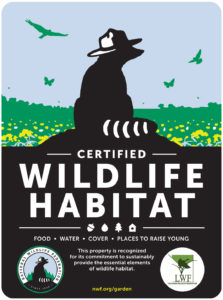
- Exclusive option to purchase attractive garden signs designating your garden as a Certified Wildlife Habitat® with the National Wildlife Federation and Louisiana Wildlife Federation.

5 Simple Tips to Get Started
- Plant a shrub that flowers for pollinators and produces berries for birds and other animals
- Put out a birdbath. Even small water features will be used by wildlife.
- Provide cover with dense shrubs, wildflower gardens, rock walls and evergreens.
- Mount a nesting box for birds, plant host plants for butterfly caterpillars or install a frog pond as places to raise young.
- Put away chemicals. Natural gardens are better for you and your family as well as the wildlife.
Want more tips? Click here!