
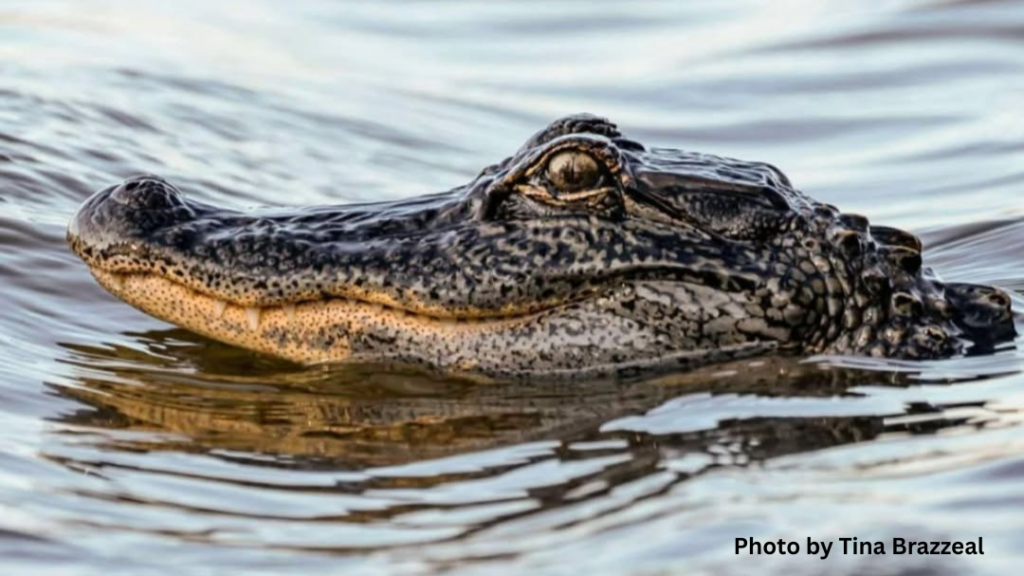
Louisiana’s new recreational alligator season may soon expand to seven national wildlife refuges across the state.
The U.S. Fish and Wildlife Service has released a Draft Environmental Assessment proposing recreational alligator hunting on Bayou Sauvage Urban, Big Branch Marsh, Black Bayou Lake, D’Arbonne, Delta, Tensas River, and Upper Ouachita National Wildlife Refuges.
If approved, the hunts could begin in October 2027 and create additional hunting opportunities each year. The Louisiana Wildlife Federation supports the proposal and has submitted comments encouraging the Service to move forward.
The proposal builds on a wildlife-management program Louisiana has developed over decades and on a new recreational opportunity that LWF supported during the 2026 legislative session. The legislature authorized the Louisiana Wildlife and Fisheries Commission to establish a recreational alligator hunting season separate from the state’s long-standing commercial harvest.
HOW TO COMMENT
The Fish and Wildlife Service is accepting public comments on the Draft Environmental Assessment through November 27, 2026. The Service’s official announcement, proposal information, and instructions for submitting comments are available online.
A Louisiana Wildlife Success Story
The American alligator is one of the country’s most recognizable wildlife-management success stories.
Louisiana’s alligator population declined substantially during the middle of the twentieth century. Through habitat protection, regulated harvest, enforcement, research, egg collection, farming, and cooperation among LDWF, landowners, hunters, and the alligator industry, the population recovered.
Louisiana now supports an estimated wild population of approximately three million alligators. The state has managed a regulated commercial harvest since 1972 and continues to adjust its program using harvest reports, habitat conditions, population information, and other biological data.
The new recreational season does not replace that system. It adds a limited public opportunity under state-established licenses, lottery selections, tags, reporting requirements, and harvest rules.
That is the kind of science-based management LWF supports: maintain healthy wildlife populations while allowing the public to make responsible use of a renewable resource.
Bringing Refuges into the State Framework
The seven national wildlife refuges included in the federal proposal did not participate in Louisiana’s first recreational season. The Fish and Wildlife Service is now considering whether to bring those lands into the same general management framework used elsewhere in the state.
Under the proposal, recreational alligator hunting on the refuges would be administered through Louisiana’s licensing and lottery system. The Fish and Wildlife Service and LDWF would work together each year to determine the number of hunters and tags assigned to each refuge.
The proposal also would not create unrestricted access or an unlimited harvest. Hunters would have to meet state licensing requirements, receive tags through the lottery system, comply with refuge rules, and report their harvest.
This provides a measured way to expand opportunity while allowing refuge managers and LDWF to maintain sustainable harvest levels.
Regulated harvest can also provide refuge managers with another tool for managing alligator populations and responding to conflicts where they occur. It gives hunters an opportunity to participate directly in wildlife management while reducing the need for refuge or state personnel to handle some animals through separate nuisance or removal efforts.
The proposal is not simply about adding another hunt. It is about applying a proven Louisiana management system to federal lands in a controlled and cooperative manner.
LWF Supports the Proposal
LWF supports opening these seven refuges to regulated recreational alligator hunting and encourages the Fish and Wildlife Service to adopt the proposal.
Our support rests on several basic points:
- Louisiana has a healthy and carefully monitored alligator population.
- LDWF has decades of experience managing the species.
- The state’s first recreational season operated through a controlled lottery and tag system.
- Refuge-specific tag levels can be set jointly by the Service and LDWF.
- The proposal expands public hunting opportunity on public land.
- Annual review allows the program to be adjusted when biological or management conditions change.
The proposal is also a good example of state and federal agencies working together. Louisiana establishes the broader hunting framework, while the Fish and Wildlife Service retains responsibility for determining what level of hunting is compatible with each refuge.
Louisiana’s first recreational alligator season grew from a practical idea advanced by Senator Bret Allain, supported by LWF and other interested organizations, approved by the Legislature, and carried out by LDWF. Extending that opportunity to national wildlife refuges is a logical next step.
It would expand public access to public lands, support active wildlife management, and build on a Louisiana program that has already demonstrated it can provide recreational opportunity while sustaining one of the state’s most important wildlife resources.