
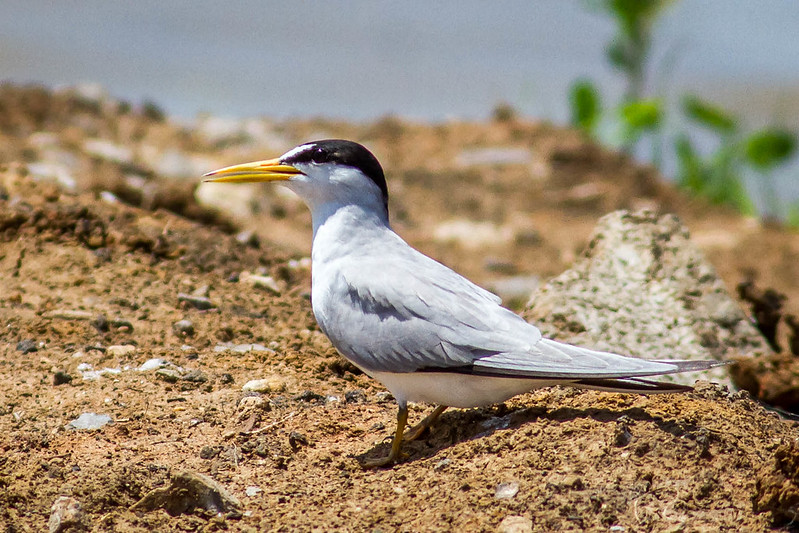
Plans to build three large parking and shuttle facilities for LNG construction workers in Cameron Parish have drawn concern from the Louisiana Wildlife Federation (LWF) and the Louisiana Ornithological Society (LOS), an LWF affiliate, particularly because one of the proposed sites would sit directly across the highway from the Peveto Woods Bird & Butterfly Sanctuary, owned by the Baton Rouge Audubon Society.
LWF submitted comment letters on two separate coastal use permit applications. Read the letters HERE and HERE.
The three proposed facilities could accommodate more than 2,000 worker vehicles. LWF says their potential effects on wildlife habitat, water quality, traffic and public safety should be considered together because the facilities are collectively intended to support construction of the Caturus/Commonwealth LNG project.
The proposed Targa site is the largest of the three, covering roughly 20 acres and providing space for about 900 vehicles. Its location next to Peveto Woods is of particular concern to LWF because the sanctuary is an important stopover for migratory birds crossing the Gulf and traveling along the Mississippi Flyway.
Three Parking Lots; One Cumulative Review
LWF is asking the Louisiana Department of Conservation and Energy (C&E) to hold a consolidated public hearing on the three applications before making final permit decisions. LWF is also seeking permit conditions addressing lighting, stormwater, wetlands and habitat protection.
“The cumulative effects on coastal habitat, water quality, traffic, and public safety cannot be meaningfully evaluated one permit at a time,” said Rick Owens, LWF Advocacy Director.
A consolidated public hearing would allow C&E, applicants, local residents, and other interested parties to consider those effects together before final permit decisions are made. It would also create a clearer public record of how the three facilities collectively affect Johnson Bayou and the surrounding coastal landscape.
Peveto Woods
Peveto Woods is of particular concern because it protects coastal chenier habitat along one of the Gulf Coast’s important migratory bird corridors. For birds crossing the Gulf during spring migration, the wooded cheniers of southwest Louisiana provide critical first-landfall habitat where birds can rest and replenish energy before continuing north.
During major migration events, large numbers of warblers, buntings, tanagers, orioles, and other species can concentrate within these relatively small areas of wooded habitat.
“A large, actively lit and trafficked parking facility directly adjacent to that sanctuary raises specific, science-based concerns,” Owens said. “Nighttime lighting disorients migrating birds, and continuous noise and activity degrade the value of a site whose entire function is to let exhausted migrants rest and refuel.”
Stormwater and Habitat
Parking lots near sensitive areas pose additional concerns beyond the day-to-day activities.
Large parking facilities create substantial impervious surfaces. Runoff from areas accommodating hundreds or thousands of vehicles can carry sediment, petroleum residues, tire and brake material, and other contaminants into surrounding drainage systems and coastal waters if not properly managed.
Site clearing, filling, and construction can also affect wetlands, local drainage, and remaining habitat around the development footprint. LWF says those effects should be evaluated across the three related facilities.
What Can You Do?
These are practical issues that can be addressed through project design and permit conditions. Please join LWF in urging:
- a consolidated public hearing in Johnson Bayou to consider the three related park-and-ride facilities together before final permit decisions are made.
- enforceable lighting measures to reduce impacts to migratory birds and appropriate wetland and habitat protections for the surrounding coastal landscape.
- appropriate stormwater controls, buffers, and other permit conditions established before construction.
“Our concern is the siting of a large, lit, and continuously trafficked parking installation within the coastal habitat of western Cameron Parish, one of the most important landscapes for migratory birds and coastal wildlife on the Gulf of America,” Owens said.
Read LWF’s comment letters HERE and HERE, as well as coverage in The Advocate.