
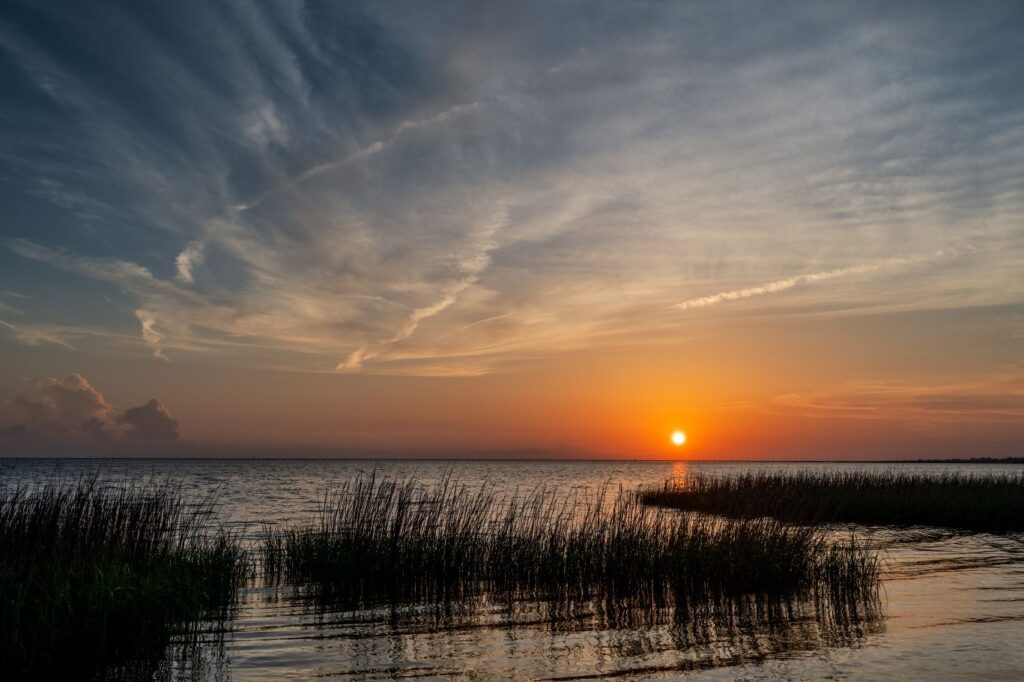
Proposed changes to how the Federal Aviation Administration (FAA) reviews commercial space projects take on particular significance in Louisiana following the Aug. 25 announcement by SpaceX and Gov. Jeff Landry of plans to build Starbase Louisiana, a massive commercial spaceport in coastal Vermilion Parish.
One day earlier, LWF, National Wildlife Federation and Pontchartrain Conservancy submitted comments opposing a proposed Federal Aviation Administration rule that could waive requirements under important environmental laws for commercial space projects like the one planned for coastal Louisiana.
LWF does not oppose commercial space development. Rather, it recognizes the economic opportunity it may bring to Louisiana. The concern is whether major space projects should receive the same kind of environmental review required of other major developments.
The proposed rule identifies 13 statutes whose requirements the Secretary of Transportation could waive. Several of these are of particular concern to LWF’s mission:
- National Environmental Policy Act — requires the environmental analysis that identifies wildlife and habitat impacts
- Endangered Species Act — protects listed species
- Clean Water Act — protects water quality
- Coastal Zone Management Act — protects state coastal programs
- Marine Mammal Protection Act — protects marine mammals
- Magnuson-Stevens Fishery Conservation and Management Act — protects essential fish habitat
Here’s what the proposed FAA changes could mean for Louisiana’s wildlife, wetlands, fisheries and coastal communities — and why LWF believes they should be reconsidered.
What is the FAA proposing to change?
In practical terms, the proposal could waive environmental requirements from the FAA licensing process for some commercial space launch and reentry activities.
The FAA says the rule is intended to streamline commercial space licensing and reduce regulatory burdens, and proposes allowing the Secretary of Transportation to waive requirements under 13 federal laws for covered commercial space activities.
The proposal is framed around national security, foreign policy, and the elimination of duplicative review.
Why does this matter in Louisiana right now?
With plans now announced for a major commercial spaceport within approximately 136,000 acres of coastal marsh in Vermilion Parish — one of the most productive wildlife habitats in the nation — the change is not abstract. It is immediate and local. Included in the proposed rule are statutes that serve to protect wetlands, wildlife, fisheries and coastal resources.
The question is whether environmental protections should be reduced just as commercial space development is expanding into one of Louisiana’s most environmentally sensitive regions.
What could happen to Louisiana’s wetlands?
A spaceport of the scale contemplated could involve filling and dredging wetlands, building roads and pads, changing water flow, withdrawing and discharging water, and altering salinity and water quality.
Environmental review is intended to identify those potential impacts before major decisions are made — and to determine whether impacts can be avoided, minimized or mitigated.
Without that review at the FAA licensing stage, LWF and its partners are concerned that the cumulative effects of a large commercial space complex on Louisiana’s already-vulnerable coastal wetlands could receive inadequate consideration.
What could it mean for wildlife and fish?
Louisiana’s coastal marshes provide habitat for migratory waterfowl, shorebirds, fish and shellfish — and endangered species including the whooping crane. The region is also part of the Mississippi Flyway, an important migration corridor for millions of birds.
These marshes support wildlife that is important not only ecologically, but also to Louisiana’s hunting and fishing traditions and economy.
The potential impacts aren’t limited to the land directly occupied by the spaceport. Construction and operations could produce high-intensity noise and light, habitat disturbance, water withdrawals and discharges, and other effects associated with repeated launches. For fisheries, changes to wetlands and water quality could affect the coastal habitat that supports shrimp, crab and finfish.
The concern is that without project-level environmental review, some of these effects could be harder to identify and address before they occur.
Why is eliminating environmental review a problem?
Environmental review can identify ways to avoid, minimize or mitigate impacts. Less environmental review means fewer opportunities to identify and address impacts before a project moves forward.
Possible mitigation efforts might include:
- moving a launch pad away from sensitive habitat;
- timing construction to avoid peak waterfowl periods;
- protecting fish from water-intake systems;
- identifying wetland losses and potential restoration.
Environmental review doesn’t make impacts disappear. It helps identify them before they’re irreversible. Reduce or eliminate that review at the FAA licensing stage, and those opportunities to identify and address problems could be lost.
Are these environmental reviews redundant?
The environmental statutes at issue serve distinct purposes: the Clean Water Act protects water quality, the Endangered Species Act protects listed species, the Coastal Zone Management Act protects state coastal programs, the Marine Mammal Protection Act protects marine mammals.
These are not duplicative reviews of the same question; they are separate examinations of different resources. Waiving all of them doesn’t eliminate redundancy; it eliminates the distinct protections each law was enacted to provide.
What is LWF asking the FAA to do?
LWF, National Wildlife Federation and Pontchartrain Conservancy are asking the FAA to withdraw or substantially revise the proposed rule and retain project-level environmental review for commercial space activities that could affect fish, wildlife and habitat.