
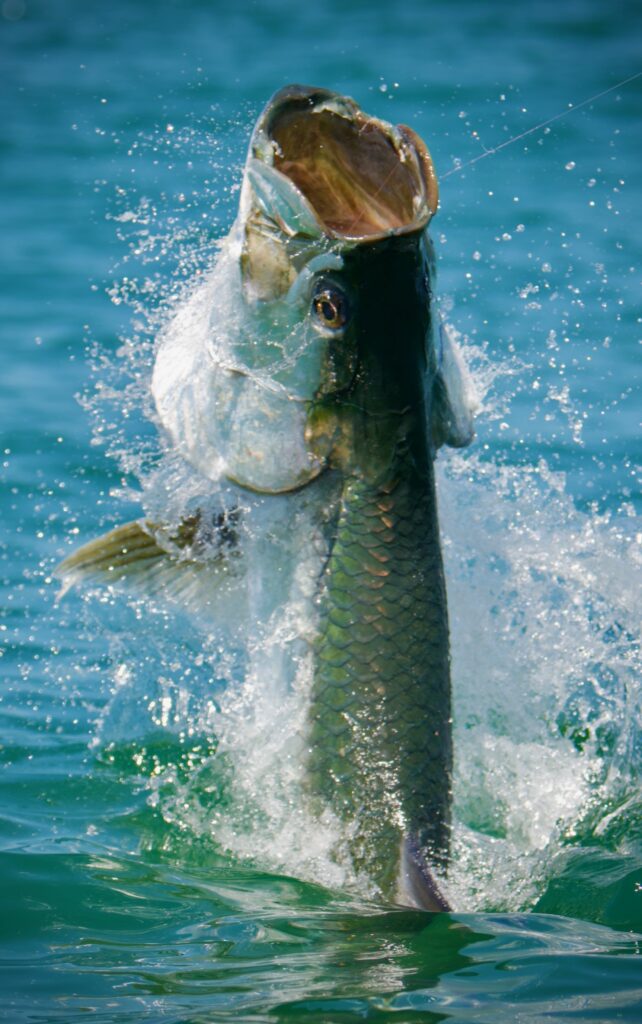
For generations, the Atlantic tarpon, known around the world as the legendary “Silver King,” has captured the imagination of anglers and coastal communities alike. Few fish in the Gulf inspire the same level of respect, challenge, and excitement as a tarpon striking a bait and launching into the air in a powerful display of strength.
Louisiana’s coastal waters have long been part of that story. Each summer and fall, adult tarpon migrate into Louisiana waters, gathering along the Chandeleur Islands, Breton Sound, Venice, and Grand Isle where they feed on schools of menhaden, mullet, and other forage species. These seasonal migrations have historically supported one of the most exciting fisheries in the Gulf region.
Recognizing the importance of this iconic species, the Louisiana Wildlife Federation recently adopted a resolution supporting responsible management and improved conservation efforts for Atlantic tarpon in Louisiana waters. The resolution reflects growing interest among anglers, scientists, and coastal stakeholders in ensuring the long-term sustainability of this unique recreational fishery.
Today, however, tarpon are far less common in Louisiana waters than they once were. While anglers and charter captains still encounter these fish each year, the historic abundance that once allowed anglers and guides to reliably target tarpon has diminished.
In response, the Louisiana Wildlife Federation (LWF) is supporting efforts to formally recognize Atlantic tarpon as a Louisiana saltwater gamefish.
Legislative Opportunity: House Bill 688
A significant step toward this goal is House Bill 688, introduced by Representative Joe Orgeron, which proposes to designate Atlantic tarpon as a Louisiana saltwater gamefish.
This legislation reflects a growing understanding across the Gulf Coast that tarpon are far more valuable as a recreational species than as a harvested fish. Tarpon are widely recognized as having no meaningful commercial fishing value, and their greatest worth lies in the recreational opportunities and economic activity they generate.
HB688 provides Louisiana with an opportunity to formally recognize tarpon as a premier recreational sportfish, align the state with other Gulf Coast states that already manage the species conservatively, and encourage responsible stewardship of this iconic fish moving forward.
The Louisiana Wildlife Federation strongly supports this effort as a balanced and forward-looking step for the state.
Recognition of Louisiana’s State Wildlife Action Plan
The need to better understand and conserve Atlantic tarpon is already recognized within Louisiana’s broader conservation planning framework. The Louisiana Department of Wildlife and Fisheries’ State Wildlife Action Plan (SWAP) identifies species that require additional research, monitoring, and conservation attention in order to ensure their long-term sustainability.
The SWAP serves as Louisiana’s official blueprint for conserving fish and wildlife species and the habitats they depend on. Developed through collaboration between state biologists, scientists, universities, and conservation partners, the plan highlights species where important information gaps exist and where proactive management can help prevent future population declines.
Within this framework, the Atlantic tarpon has been identified in Louisiana’s State Wildlife Action Plan as a Species of Greatest Conservation Need, highlighting the need for additional research, monitoring, and conservation attention. The plan identifies several priorities for the species, including improving scientific understanding of population trends, movement patterns, and habitat use, while strengthening collaboration among researchers, anglers, and resource managers to better inform future conservation and management efforts.
These priorities align with the broader conservation discussion surrounding Atlantic tarpon in Louisiana. HB688 represents an important first step in that process by formally recognizing the species as a Louisiana saltwater gamefish. While the legislation itself focuses on classification, this designation would establish a foundation for future research, monitoring, and responsible management efforts consistent with the priorities already identified in Louisiana’s State Wildlife Action Plan.
The Louisiana Wildlife Federation believes this approach reflects the kind of science-based, forward-looking management that has successfully supported the recovery and conservation of many other important fish and wildlife species across the state.
Louisiana’s Tarpon Tradition
Louisiana has a long and proud fishing heritage, and tarpon have always been part of that story. Historic accounts describe large schools of tarpon gathering along Louisiana’s barrier islands and coastal waters during the warmer months.
Seasonal encounters with these fish still draw anglers to the coast each year. From the waters surrounding Grand Isle to the outer island chains of the Chandeleur, the sight of a massive tarpon rolling on the surface remains one of the most exciting experiences Louisiana anglers can have.
For many charter captains, tarpon season once represented one of the highlights of the year. While today’s numbers are smaller than in the past, the species still represents a powerful symbol of Louisiana’s coastal fishing culture.
By recognizing tarpon as a Louisiana saltwater gamefish, the state can help ensure that this tradition remains part of Louisiana’s future.
Responsible Management Moving Forward
The Louisiana Wildlife Federation believes that responsible management is essential for maintaining healthy fisheries and sustaining Louisiana’s reputation as Sportsman’s Paradise.
Across the Gulf Coast, states have increasingly adopted conservation-focused tarpon regulations that emphasize responsible fishing regulations and long-term sustainability. These efforts have helped maintain strong recreational fisheries while protecting the species for future generations.
The proposed management approach for Louisiana reflects a balanced starting point consistent with other Gulf states and designed to support:
- Responsible recreational fishing
- Long-term conservation of the species
- Continued opportunities for anglers and charter guides.
As more scientific research becomes available, management strategies can continue to evolve to ensure the species remains a vibrant part of Louisiana’s coastal fisheries.
Looking Ahead
By recognizing Atlantic tarpon as a Louisiana saltwater gamefish, the state has an opportunity to join other Gulf Coast states in adopting common-sense protections for one of the world’s most celebrated sportfish. Across the Gulf, and throughout the broader range of the species, states and countries have increasingly recognized the tarpon as a significant recreational resource.
Louisiana has a long tradition of world-class fishing, and the seasonal arrival of tarpon has historically been one of the most exciting and iconic parts of that tradition. While tarpon were once far more common in Louisiana waters, renewed attention to conservation and responsible fisheries management offers an opportunity to rebuild that legacy for future generations.
The Louisiana Wildlife Federation believes that recognizing Atlantic tarpon as a Louisiana saltwater gamefish represents a balanced and forward-looking first step. By supporting science-based management, continued research, and cooperative conservation efforts among anglers, guides, scientists, and state agencies, Louisiana can help ensure that future generations of anglers will continue to experience the thrill of encountering the legendary “Silver King” in Louisiana waters.
Readers can view LWF’s Atlantic Tarpon Resolution HERE.
Representative Joseph Orgeron’s House Bill 688 can be viewed HERE.