
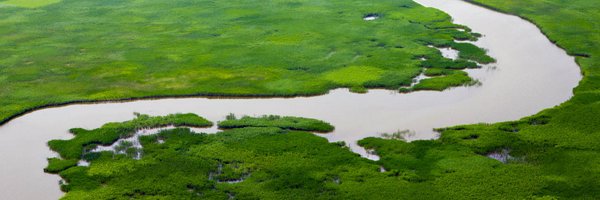
Most of us never think about the water under our feet. But aquifers supply drinking water to towns and rural homes across Louisiana, irrigate our farms, supply industry users, and help keep springs, creeks, and wetlands flowing for our wildlife and the habitat they depend on. When aquifers are pumped faster than they recharge, wells go dry, saltwater creeps in, and the land itself can sink.
Right now, the Louisiana Department of Conservation and Energy (C&E) is asking the public to weigh in on how the state manages that groundwater. The comment period closes at the end of the business day on Thursday, October 15, 2026. You do not need to be a hydrologist or a lawyer to take part. This post explains what’s on the table, where the Louisiana Wildlife Federation stands, and how you can add your own voice in a few minutes.
One Step on a Longer Road
This comment period is an early, informal step, and that is exactly why it matters. C&E released a draft on Aug. 28 and asked for “initial public comment” before it begins formal rulemaking. Ideas raised now can shape the rule before it is locked into an official proposal.
It also sits inside a bigger effort. Louisiana has spent more than $5 million on a dozen water studies since 1956 without ever adopting a statewide water plan, according to the Legislative Auditor’s 2020 review. That now has a chance to change.
Groundwater rules alone won’t deliver a water plan. But a plan built without solid groundwater information is a foundation for failure.
Much of the draft is housekeeping, combining well-drilling, well-plugging, and groundwater rules into one place and updating agency names. A few changes carry real weight for anyone who farms, fishes, or hunts in Louisiana, and everyone who drinks water.
Which wells count as “large”
Today, a well must be able to pump 1,500 gallons per minute before the state treats it as a large-volume well. The draft drops that to 300 gallons per minute, or any well with an eight-inch-or-larger screen. Running nonstop, a 300-gallon-per-minute well can pull about 432,000 gallons a day, so this brings more users into view.
A new early-warning tool
The draft creates “Areas of Investigation.” These let the state study an aquifer showing trouble, such as falling water levels, saltwater moving in, or the ground sinking, before it reaches a crisis. Under current rules, the process usually starts only after a well owner applies and shows they have already been harmed.
Keeping aquifers separate
New wells and test holes could no longer be screened across more than one aquifer. That keeps water of different quality from mixing and protects cleaner layers.
Exceptions and appeals
The draft changes how the department grants variances (exceptions to the rules) and sends appeals of the Secretary’s orders to the 19th Judicial District Court in Baton Rouge.
The Capital Area
The Capital Area Ground Water Conservation District, which managed the Baton Rouge-area aquifers, has been dissolved. Its rules are carried forward under C&E. That region has faced falling water levels and saltwater moving toward public supply wells for decades.
The big question underneath it all: do we know how much water is being used? Louisiana still does not consistently measure and report groundwater withdrawals statewide. And under the 2025 law, agricultural water use is exempt from the new oversight program, with participation voluntary and free. How the state accounts for all major uses, while accounting for that exemption, is one of the most important issues in this conversation.
Where LWF Stands
LWF submitted comments on Oct. 12 supporting the direction of the draft here. Lowering the large-well threshold, creating Areas of Investigation, and banning wells that mix aquifers are all sound steps. Our interest in groundwater is equal to our interest in rivers, wetlands, springs, fisheries, and wildlife habitat because they are intrinsically connected.
Our central message is simple: you can’t manage what you don’t measure. Fees and limits can differ by region, use, and aquifer. The need for basic information doesn’t. Among our recommendations, we asked C&E to:
- Count every large well. Require large-volume wells to measure and report what they pump, to the full extent the law allows, phased in over time.
- Close the “split it up” loophole. Treat related wells serving one project together, so a big user can’t dodge review by drilling several smaller wells.
- Turn investigations into action. Give Areas of Investigation public notice, a review schedule, published findings, and a clear path to a decision.
- Put decisions in writing. Explain each large-well and variance decision and make them public.
- Respect agriculture and include it. We asked for a simple, cost-free, voluntary way for producers to share data, because an incomplete water budget doesn’t protect farmers. They are often first in line when shortages force hard choices.
- Fund the job. C&E needs the staff and resources to do what the Legislature has asked of it.
This is not about opposing farms, factories, or new investment. Large projects are coming to Louisiana, including data centers, steel mills, and industrial complexes. We want the state to know where its water is going early enough to plan for everyone who depends on it, fish and wildlife included.
Others share these concerns. The Tulane Institute on Water Resources Law and Policy also welcomed the new Areas of Investigation and urged the state not to wait for a harmed well owner before acting.
How to Make Your Voice Heard
Comments are due by close of business Thursday, October 15, 2026. Learn the details of the proposed rules and find a link to the form or email address where you can submit your comments.
A short, personal note carries weight.
- Say who you are and why you care. A landowner with a household well, a farmer, a hunter, an angler.
- Pick one or two points that matter to you. You don’t need to cover everything.
- Be specific and respectful. Say what you support and what you’d like to change.
- Keep it short. A few sentences is plenty.
Not sure where to start? Use or adapt this sample:
I’m a Louisiana resident from [your parish], and I care about protecting our groundwater for [drinking water / farming / fish and wildlife / future generations]. I support the Department’s work to update these rules, especially the lower threshold for large-volume wells and the new Areas of Investigation. I ask that the final rule make sure large water users measure and report what they pump, so the state has the information it needs to build a real statewide water plan. Thank you for the opportunity to comment.
The Bottom Line
Louisiana is finally trying to lay the groundwork for a real statewide water plan, and these groundwater rules are one of the first pieces. Decisions made now will shape what the state knows about its water for years. That affects whether our wells, farms, rivers, and wetlands have what they need in the next drought.
Take five minutes before Oct. 15 and tell C&E what Louisiana’s water means to you. Then share this post with a neighbor, your hunting camp, or your fishing buddies. LWF will keep following this rule through formal rulemaking and the statewide water plan as it develops.