
The U.S. Environmental Protection Agency (EPA) and the Army Corps of Engineers are rewriting the definition of “waters of the United States,” the line that decides which streams and wetlands the Clean Water Act protects. The Louisiana Wildlife Federation (LWF) has filed formal comments on the latest proposal. Here is what’s at stake and what we told the agencies.
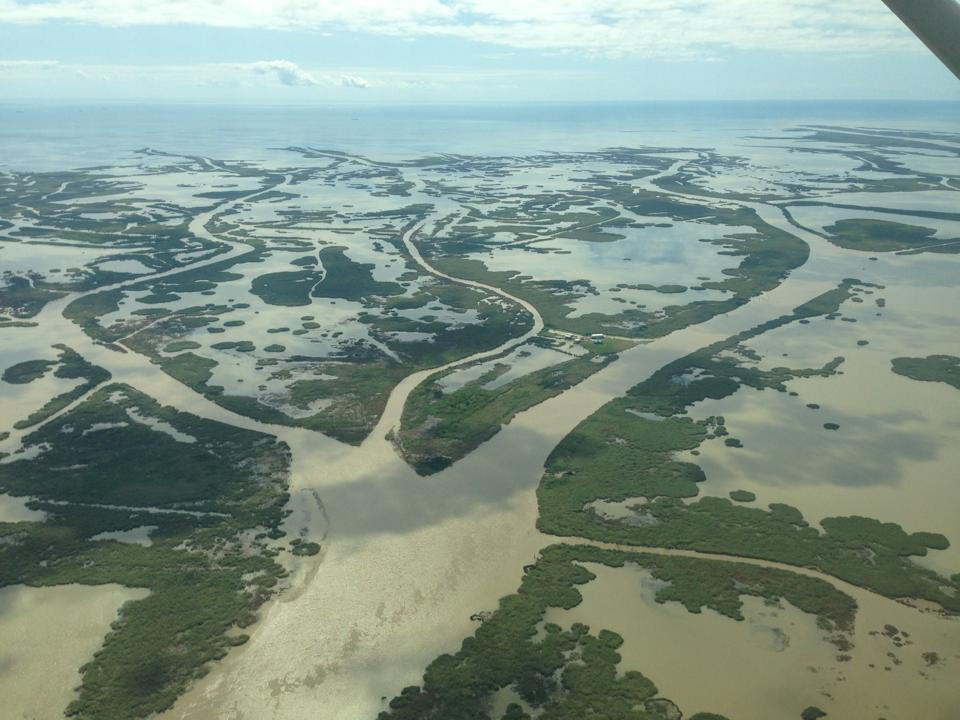
Few things sound more like Washington paperwork than the “definition of waters of the United States,” or WOTUS. But that definition is the switch that turns Clean Water Act protection on or off for a given stream or wetland, and no state is more exposed to where that switch gets set than Louisiana. We hold roughly 40 percent of the coastal wetlands in the lower 48 states. Those wetlands anchor a seafood industry that ranks second in the nation and winter a large share of the Mississippi Flyway’s ducks and geese. When the federal line moves, it moves across an enormous share of our landscape, far more than in most states.
On Sept. 9, the EPA and the Army Corps published a supplemental proposal (Docket No. EPA-HQ-OW-2025-0322) that would narrow that line further. LWF submitted detailed comments, and the short version of our position is the same one we bring to most of these fights: We’re not asking the agencies to ignore the law. We’re asking them to follow it, and no more than that.
The Legal Backdrop
In 2023, the Supreme Court decided Sackett v. EPA and narrowed the reach of the Clean Water Act. The agencies must implement that decision, and we don’t dispute it. But implementing Sackett and going beyond it are two different things, and the current proposal drifts into the second. It would do that mainly by collapsing a distinction that matters a great deal in a Gulf Coast state: the difference between “relatively permanent” and “perennial.”
“Relatively Permanent” Is Not “Perennial”
Sackett used the phrase “relatively permanent.” The supplemental proposal would, under one option on the table, define the protected category around perennial water, water that flows essentially every day of the year. In Louisiana, that is not a small edit. Many of the streams that feed our swamps, bayous, and estuaries run strong through the wet season and fall off in late summer. They are no less important to downstream fisheries and habitat for being seasonal; in our climate, seasonality is the norm, not the exception. A perennial-only test would strip protection from a large share of the very waters that deliver freshwater, sediment, and nutrients to the systems the state is spending billions to hold together.
We asked the agencies to keep a meaningful seasonal, wet-season component in “relatively permanent,” so that predictable seasonal waters aren’t swept out alongside the truly ephemeral features that flow only after a rainstorm. Sackett did not require treating those two things the same. The agencies shouldn’t either.
“Continuous Surface Connection” Has to Fit a Delta
The proposal would also tighten the test for which wetlands stay protected by leaning on the presence of perennial surface water. Our coast doesn’t work that way. In a deltaic landscape, marsh and open water grade into one another across vast areas, and a wetland’s connection to the bayou or bay beside it is often continuous precisely because it’s hard to say where the water ends and the wetland begins, the very condition Sackett describes as the mark of a protected wetland. A test that demands year-round surface water would read functioning, plainly connected marsh out of protection because its ordinary cycle includes a seasonal drawdown. We urged the agencies to judge that connection under ordinary hydrologic conditions, not by whether water stands there every single day.
The Part We Most Want the Agencies to Hear
Not every exclusion in this proposal is something the Court required. Some of them are a policy choice the agencies are making on their own. The agencies themselves admit they can’t reliably quantify how much water and wetland would lose protection, while acknowledging the effect could be significant. Large potential effect and uncertain magnitude; that combination calls for caution, and it makes one thing essential: the final rule should state plainly which limits Sackett compelled and which the agencies chose. The public and the courts deserve to see which lines were drawn by the Supreme Court and which were drawn in the rulemaking.
Why This Lands Harder Here
There’s a common assumption behind rules like this one, that when the federal government steps back, the state steps in. In Louisiana, that assumption doesn’t hold cleanly. The state has real water-quality authority and, within the coastal zone, a coastal permitting framework. But outside the coastal zone, Louisiana does not run a comprehensive statewide dredge-and-fill permit program equivalent to Section 404, and it has not assumed that federal program. The newer CURRENT Authority coordinates water-resource planning, but it is a planning body, not a wetland permitting program.
So, when an inland Louisiana wetland loses federal protection, there often isn’t an equivalent state permit waiting to take its place. The practical result isn’t a handoff from one government to another; it’s the loss of the review that used to require avoidance, minimization, mitigation, and public notice before someone could drain or fill. We asked the agencies to describe that honestly in the record, rather than assume a transfer that doesn’t exist.
Where This Goes
Read LWF’s full comments to the EPA and the Army Corps.
We’ll continue to track this rule as it moves toward a final decision. The Clean Water Act was written to protect the waters this definition describes, and the agencies can conform it to Sackett while still doing exactly that. That’s all we’ve asked them to do.
The Louisiana Wildlife Federation has been the voice of Louisiana’s wildlife and natural resources since 1940.